Communalism
Model created by Murray Bookchin based on autonomous municipalities and federated popular assemblies, with a community economy and direct democracy, seeking to replace the state with a free confederation.
Compare with…Home / Ideologies / Communalism
Model created by Murray Bookchin based on autonomous municipalities and federated popular assemblies, with a community economy and direct democracy, seeking to replace the state with a free confederation.
Compare with…In one sentence
I want autonomous municipalities with federated popular assemblies, a community economy and direct democracy, replacing the state with a free confederation.
Political axes
Leans further toward federal than 97% of the 276 ideologies in the catalog.
Of all the axes, Structure is where it stands furthest from the rest.
On Sovereignty, it sits close to the catalog median.
Here it shares common ground with most ideologies.
Analytical Summary & Scientific Audit
Communalism belongs to the Anarchist political family across the 12 Axes framework. Core measured positions: Structure: 98% Federal; Geopolitics: 97% Pacifist; Immigration: 93% Multiculturalism; Economy: 91% Public.
Political current calibrated from primary treatises in political philosophy and history of economic thought (SEP / HET).
Primary sources & scientific datasets
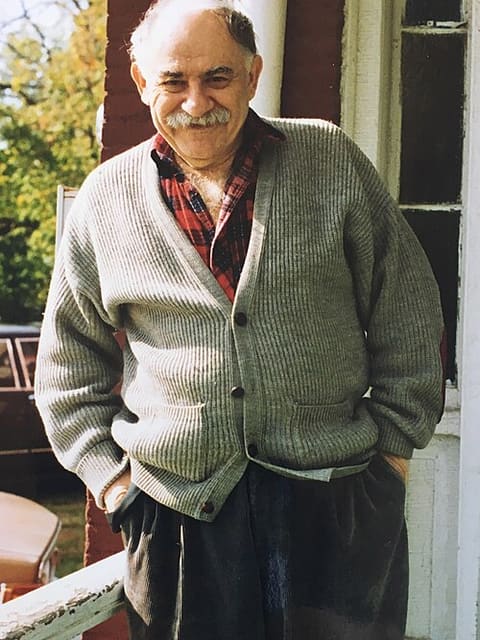
An American thinker, Bookchin created social ecology and communalism, defending autonomous municipalities, direct democracy, and harmony with nature, influencing radical environmentalism and the Rojava experiment.
Closest, by dimension
Other compatible profiles
The most distant
Reference country
An autonomous region in northern Syria, Rojava organizes itself through democratic confederalism, with local self-management, gender equality, ethnic pluralism, and ecology, inspired by the libertarian ideas of Abdullah Öcalan.
Other close countries
An autonomous region in northern Syria, Rojava organizes itself through democratic confederalism, with local self-management, gender equality, ethnic pluralism, and ecology, inspired by the libertarian ideas of Abdullah Öcalan.
Also close, by dimension
The most distant
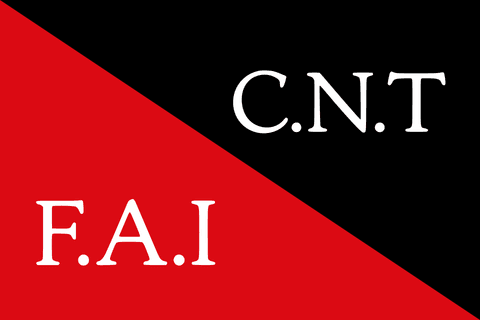
During the Spanish Revolution, regions of Aragon and Catalonia lived an anarchist experiment of collectivizing land and factories, with workers' self-management and social organization without a central state.
Also close, by dimension



The most distant
Ideological proximity
Closest within Anarchist
Current that unites anarchism and communism, proposing a society without state or private property, with collective production and distribution according to need, based on free association and mutual aid.
Current that pursues socialism without an authoritarian state, uniting collective ownership and self-management with broad individual freedom, organized from the bottom up by free communities and workers.
Current that unites anarchism and radical ecology, defending decentralized, sustainable communities without a state or exploitation of nature, in harmony with ecological cycles and non-human life.
Closest in other spectrums
Movement that places unions and workers' organization at the center of politics, defending collective bargaining, direct action, and labor control over production as the path to working-class emancipation.
Current that attributes intrinsic value to all life and not only to human beings, defending a profound change of values, the reduction of human impact, and respect for the balance of the planet's ecosystems.
Democratic Marxism inspired by Rosa Luxemburg, which unites revolution and freedom, values the spontaneity of the masses and the general strike, and criticizes both reformism and the authoritarian centralism of vanguard parties.
The most distant ideology
Techno-FascismThird Position0%