Home / Countries / Qing Dynasty China

Confucian dynastic empireHistorical regime · 1644–1912

Qing Dynasty China

China's last imperial dynasty, founded by the Manchus, the Qing ruled through a Confucian examination bureaucracy, extended the empire to Tibet and Xinjiang, restricted foreign trade to Canton and declined with the Opium Wars and the Taiping Rebellion.

Predominant spectrum
Third Position
Closest ideology
Eco-Fascism
Closest personality
Raphael Machado
Compare with…
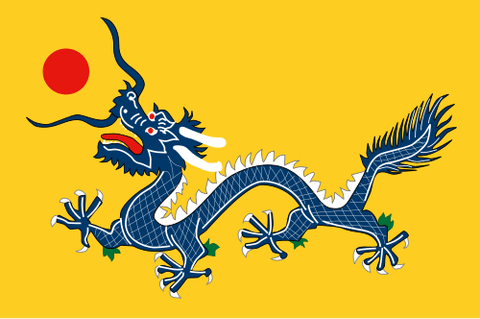
Flag: Qing Dynasty China

Political axes

Profile across the 13 axes

  • Structure

    Leaning · Unitary
    Federal43%
    Unitary58%
  • Representation

    Very strong · Autocracy
    Democracy3%
    Autocracy97%
  • Power

    Strong · Security
    Security81%
    Liberty19%
  • Immigration

    Balanced
    Assimilation52%
    Multiculturalism49%
  • Geopolitics

    Strong · Militarist
    Militarist78%
    Pacifist23%
  • Sovereignty

    Strong · Sovereigntist
    Sovereigntist84%
    Multilateralist16%
  • Economy

    Leaning · Public
    Public60%
    Private40%
  • Control

    Strong · Planning
    Planning76%
    Free market25%
  • Trade

    Very strong · Protectionism
    Protectionism96%
    Free trade5%
  • Religion

    Leaning · Religious
    Secular36%
    Religious65%
  • Morality

    Very strong · Traditionalist
    Progressive10%
    Traditionalist90%
  • Ecology

    Balanced
    Conservation50%
    Productivism51%
  • Technoscience

    Strong · Precaution
    Acceleration21%
    Precaution79%

What sets Qing Dynasty China apart

Most unusual position

Trade

Leans further toward protectionism than 98% of the 320 countries and regimes in the catalog.

Country median 44Qing Dynasty China 96

Of all the axes, Trade is where it stands furthest from the rest.

Most common position

Religion

On Religion, it sits practically at the catalog median.

Country median 33Qing Dynasty China 36

Here it shares common ground with most countries.

Analytical Summary & Scientific Audit

12-Axis Synthesis & Primary Sources

Verified Methodological Grounding

Qing Dynasty China exhibits a predominantly Third Position institutional profile on comparative datasets. Core measured traits: Representation: 97% Autocracy; Trade: 96% Protectionism; Morality: 90% Traditionalist; Sovereignty: 84% Sovereigntist.

Calibrated from documented institutional, fiscal and military arrangements of the historical era.

Primary sources & scientific datasets