Conservative Liberalism
Synthesis that unites free markets and economic freedoms with the appreciation of tradition, order, and institutions, defending prudent change and social stability within the framework of liberal democracy.
Compare with…Home / Ideologies / Conservative Liberalism
Synthesis that unites free markets and economic freedoms with the appreciation of tradition, order, and institutions, defending prudent change and social stability within the framework of liberal democracy.
Compare with…In one sentence
I want a society that unites the free market with tradition and institutions, changing prudently within the frame of liberal democracy.
Political axes
Leans further toward free market than 91% of the 276 ideologies in the catalog.
Of all the axes, Control is where it stands furthest from the rest.
On Sovereignty, it sits practically at the catalog median.
Here it shares common ground with most ideologies.
Analytical Summary & Scientific Audit
Conservative Liberalism belongs to the Right political family across the 12 Axes framework. Core measured positions: Control: 84% Free market; Economy: 79% Private; Trade: 74% Free trade; Religion: 69% Religious.
Ideology calibrated from canonical comparative Political Science literature (Heywood, Bobbio, Freeden, MARPOR and CHES).
Primary sources & scientific datasets
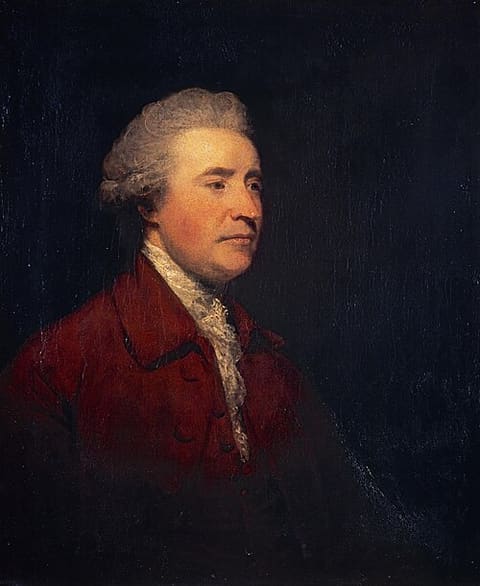
The father of modern conservatism, Burke defended prudent reform, tradition, and institutions against abstract rationalism and revolutionary rupture, harshly criticizing the excesses of the French Revolution.
Closest, by dimension


Other compatible profiles




The most distant
Reference country

The financial and cultural center of the United States, New York combines liberal, progressive politics, enormous immigrant diversity, a globalized service-based economy, and strong symbolic weight in the world.
Other close countries
The autonomous community around the Spanish capital, Madrid has been governed by the People's Party since 1995 and, under Isabel Díaz Ayuso, became a showcase of low taxes, economic freedom, school choice and attraction of capital and Latin American immigrants.
Also close, by dimension
The most distant
A city-state of the Italian Renaissance, Florence united banking and commercial capitalism, factional disputes among guilds and families such as the Medici, and a patronage that revolutionized the arts, letters, and political thought.
Also close, by dimension
The most distant
Ideological proximity
Closest within Right
Right-wing current that combines free markets, free trade, and limited government with strong national identity, cultural assimilation, traditional and religious values, and a robust military.
Pragmatic branch that prioritizes fiscal adjustment, economic stability, and governability through broad coalitions, accepting market reforms and political concessions in the name of short- and medium-term results.
The East Asian Tiger model (Singapore, South Korea, Taiwan, Hong Kong): champions free markets, foreign trade and private enterprise as engines of growth, paired with an active technocratic state that plans infrastructure, education and strategic industrialization, stopping short of closed protectionism or hard authoritarian control.
Closest in other spectrums
Synthesis that unites free markets and a minimal state with the defense of tradition, family, and order, valuing individual freedom and personal responsibility alongside the preservation of customs and institutions.
Centrist branch that combines economic moderation and institutional respect with social conservatism, valuing family, religion, order, and gradual change without joining the authoritarian right or populist radicalism.
Branch that combines the defense of individual freedoms and free markets with appreciation for national sovereignty and identity, defending limited government alongside border control and the nation.
The most distant ideology
Pol Pot SocialismRadical Left27%