Lassallean Socialism
Socialist current that seeks to emancipate workers through the national state itself, with universal suffrage, producer cooperatives funded by public money and an explicit refusal of the revolutionary path.
Compare with…Home / Ideologies / Lassallean Socialism
Socialist current that seeks to emancipate workers through the national state itself, with universal suffrage, producer cooperatives funded by public money and an explicit refusal of the revolutionary path.
Compare with…In one sentence
I want to emancipate the worker through universal suffrage and cooperatives funded by the national state itself, without the revolutionary path.
Political axes
Leans further toward liberty than 79% of the 276 ideologies in the catalog.
Of all the axes, Power is where it stands furthest from the rest.
On Representation, it sits practically at the catalog median.
Here it shares common ground with most ideologies.
Analytical Summary & Scientific Audit
Lassallean Socialism belongs to the Left political family across the 12 Axes framework. Core measured positions: Religion: 83% Secular; Structure: 80% Unitary; Economy: 80% Public; Control: 80% Planning.
Ideology calibrated from canonical comparative Political Science literature (Heywood, Bobbio, Freeden, MARPOR and CHES).
Primary sources & scientific datasets
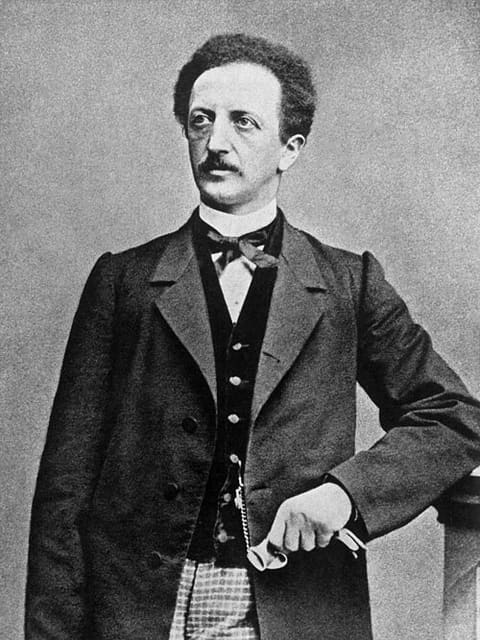
A pioneer of state socialism, Lassalle championed universal suffrage and state-funded cooperatives, founding the first major German workers' party and influencing European social democracy.
Closest, by dimension
Other compatible profiles

The most distant
Reference country
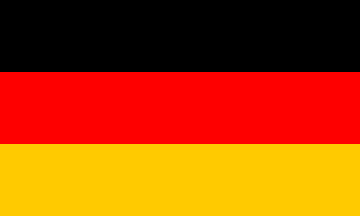
A parliamentary federal republic, Germany is Europe's largest economy, with a social market economy, a strong export industry, and a central role in the European Union, uniting democratic stability and geopolitical weight.
Other close countries

A European semi-presidential republic, France combines a strong republican and secular tradition, a robust welfare state, a mixed economy, and a prominent diplomatic, cultural, and military role in the European Union and the world.
Also close, by dimension

The most distant
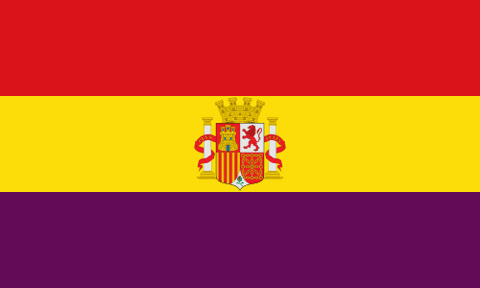
Marked by the conservative biennium, the Popular Front victory, and the Spanish Civil War, the Republic defended secularism and parliamentary democracy with Soviet support and international brigades against Francoist fascism.
Also close, by dimension
The most distant
Ideological proximity
Closest within Left
A current that sees the unitary, centralized state as the guarantor of individual liberty: uniform law, secularism and single citizenship dismantle the local, clerical and corporate privileges that would oppress the individual without a strong national power.
A 1970s Western European communist current that sought a national path to socialism through elections, party pluralism and civil liberties, independent of Moscow, with a mixed economy under democratic planning.
Current that advocates industrialization, national sovereignty, and strategic state planning, seeking to modernize the economy through public investment, productive protection, and coordination between government, science, and national companies.
Closest in other spectrums
Doctrine of Mustafa Kemal Atatürk that founded modern Turkey on six arrows: republicanism, nationalism, populism, statism, laicism and reformism, imposing Westernization and state control of religion from above.
Current that keeps the welfare state, trade unions and mixed economy, but defends family, nation, public order and restricted immigration, as in Mette Frederiksen's Danish social democracy.
Final stage theorized by Marx and Engels: a classless, stateless society without private ownership of the means of production, with collective production and distribution according to need, superseding capitalism and the transitional socialist phase.
The most distant ideology
Anarcho-ConservatismLibertarian28%