National Capitalism
System that unites free enterprise with strong protectionism and state direction, prioritizing industry, jobs, and national sovereignty over global free trade and unchecked foreign capital.
Compare with…Home / Ideologies / National Capitalism
System that unites free enterprise with strong protectionism and state direction, prioritizing industry, jobs, and national sovereignty over global free trade and unchecked foreign capital.
Compare with…In one sentence
I want national industry protected by tariffs and state planning, with free enterprise serving the sovereignty and jobs of the country.
Political axes
Leans further toward religious than 85% of the 276 ideologies in the catalog.
Of all the axes, Religion is where it stands furthest from the rest.
On Economy, it sits close to the catalog median.
Here it shares common ground with most ideologies.
Analytical Summary & Scientific Audit
National Capitalism belongs to the Far-Right political family across the 12 Axes framework. Core measured positions: Morality: 88% Traditionalist; Structure: 86% Unitary; Religion: 84% Religious; Trade: 83% Protectionism.
Historical or radical ideology calibrated from comparative regime historiography and political thought literature (SEP / OpenAlex).
Primary sources & scientific datasets
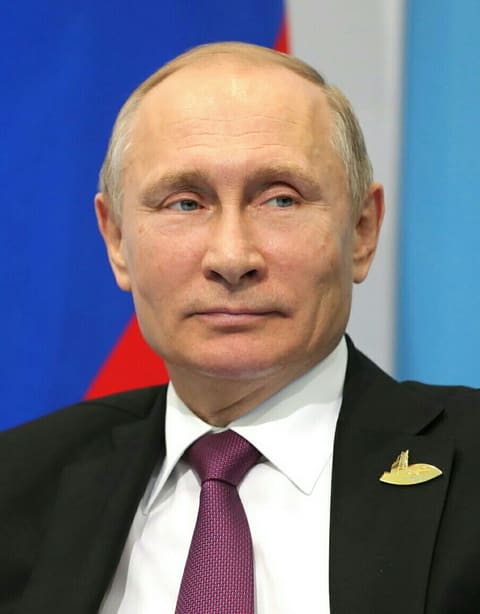
Russia's leader for over 25 years, Putin crushed all real opposition, nationalized strategic sectors under patrimonial state capitalism, pushes anti-LGBT and traditional-values laws with the Orthodox Church, restricts Central Asian immigration, wages war on Ukraine, and censors the internet via AI in the name of digital sovereignty.
Closest, by dimension

Other compatible profiles
The most distant
Reference country
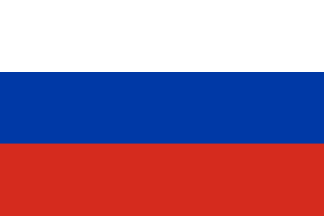
A Eurasian presidential republic, Russia concentrates power in an authoritarian, nationalist regime, with an economy dependent on natural resources, a strong military apparatus, and a foreign policy of confrontation with the West.
Other close countries
A Eurasian presidential republic, Russia concentrates power in an authoritarian, nationalist regime, with an economy dependent on natural resources, a strong military apparatus, and a foreign policy of confrontation with the West.
Also close, by dimension
The most distant
Dictatorship installed in 1964, combining political repression, censorship, and security agencies with state-led developmentalism, major infrastructure projects, market reserves, and conservative moralism during the Cold War.
Also close, by dimension
The most distant
Ideological proximity
Closest within Far-Right
Conception that defines the nation by shared origin, language and descent, defending a state for the majority ethnic group and the preservation of its identity, which usually implies membership criteria tied to ancestry.
Current that preserves order, tradition, and hierarchy through a strong state, restricting freedoms and political participation in the name of social stability, morality, religion, and established authority.
Caesarist current that legitimises a charismatic leader by plebiscite above parties, combining personal authority, bureaucratic centralisation, military mobilisation and state-led modernising reforms.
Closest in other spectrums
Nationalist and syndicalist current that rejects liberalism and Marxism, advocating national unity, corporatist organization of labor, authoritarian social justice, and popular mobilization around the state.
Getúlio Vargas's Estado Novo doctrine joining economic nationalism, a centralized state, state-tied unions, labor law and state firms such as Petrobras, against the regional oligarchies and liberalism.
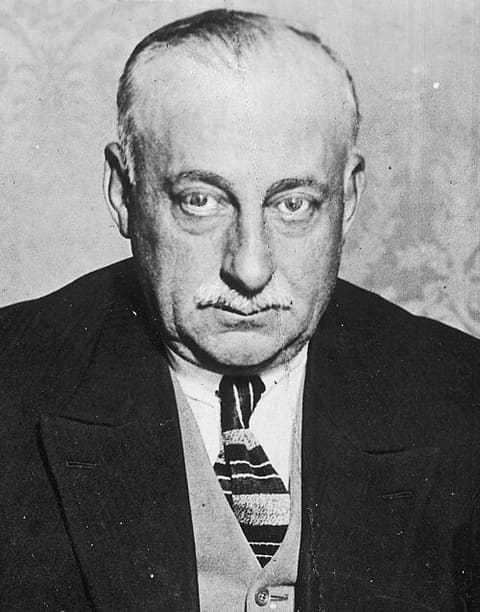
Spanish authoritarian nationalism of Catholic and syndicalist inspiration, created by José Antonio Primo de Rivera on the corporatism of his father Miguel's dictatorship; it defends a corporatist state, national unity and social hierarchy, and was a pillar of Francoism.
The most distant ideology
Anarcho-PacifismAnarchist1%